
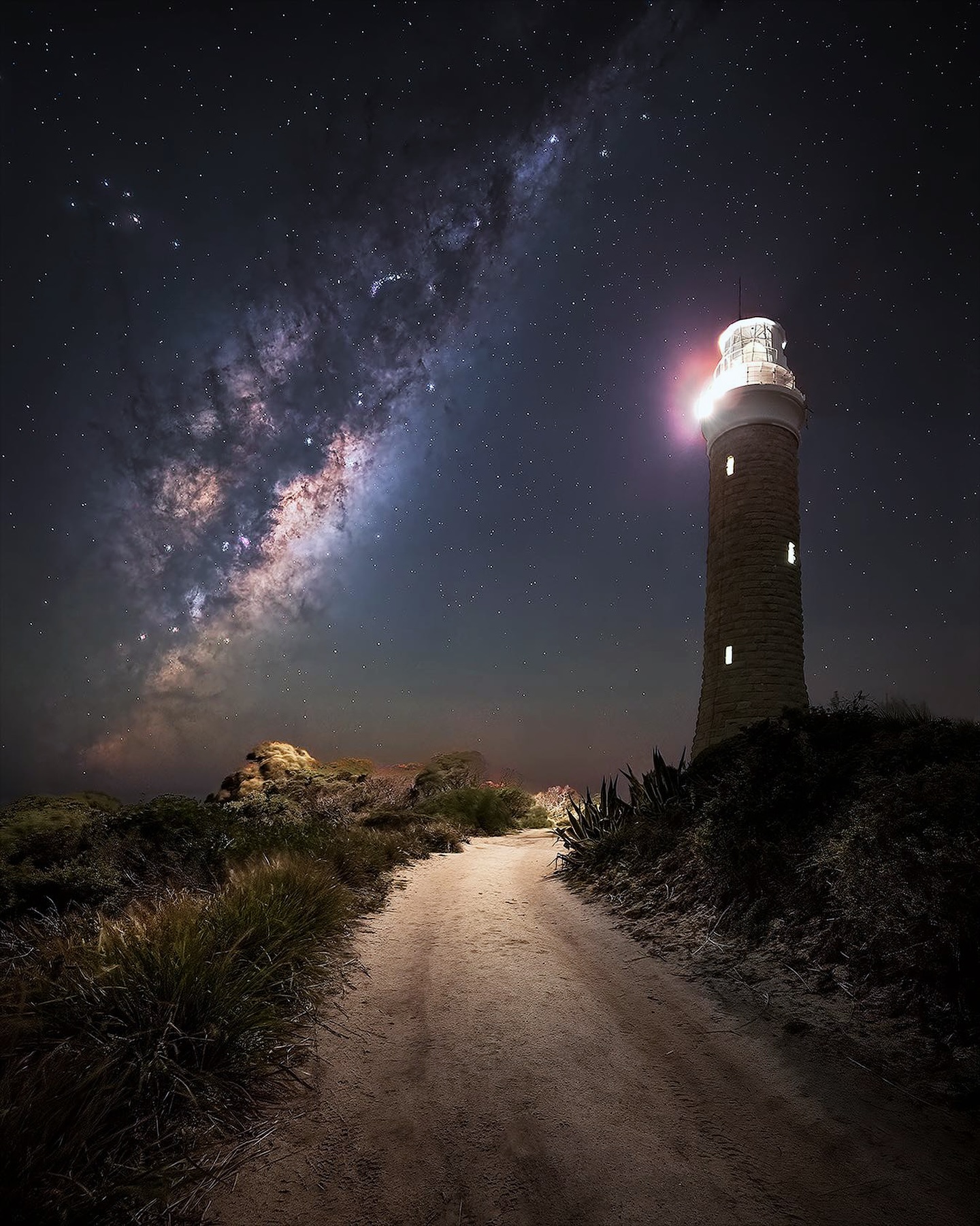
Eddystone Point feels deliberately far away. The granite lighthouse stands at the end of a long north-east detour, with low coastal heath, pale rock and open sea around it rather than a developed visitor precinct.
The lighthouse opened in 1889 and remains the visual anchor, but the reason to make the drive is the setting as much as the building itself. This is the southern end of Mount William National Park, where the visit works best as part of a broader day on the north-east coast.
How to get there
Approach Eddystone Point through Gladstone. From Launceston, the drive to Gladstone takes roughly two to three hours depending on the route; from there continue into Mount William National Park and follow the signed roads towards the lighthouse.
The final approach is remote and includes unsealed road. Allow more time than the distance alone suggests, carry what you need for the day and do not plan on finding the services of a town once you enter the park. A valid Tasmania Parks and Wildlife Service pass is required for Mount William National Park.
What to see
The lighthouse
Eddystone Point Lighthouse was built from local granite and opened in 1889. Its heavy stone tower suits the coast around it: exposed, practical and built to be seen from a long way offshore.
You do not need a formal walk to appreciate it. Spend time around the public coastal area, looking back at the lighthouse from the surrounding heath and granite rather than treating the tower as a single photo stop.
The coast around Eddystone Point
The shoreline is the other half of the visit. Granite shelves, boulders and low vegetation meet an open stretch of Bass Strait, with far less development than the better-known beaches around Binalong Bay.
Stay well back from exposed rock edges in rough weather. This coast can be windy and the sea conditions change quickly, so the strongest viewpoints are not always the closest ones to the water.
Deep Creek and Mount William National Park
If you have more time, extend the visit into Mount William National Park rather than immediately driving back. Deep Creek lies south of the lighthouse and is one of the park's camping areas, while the wider park protects a long stretch of north-east coast and important wildlife habitat.
Eddystone Point also makes a useful northern counterpart to the Bay of Fires. They share the same broader north-east journey, but the experience here is quieter, more remote and centred on the lighthouse and national-park landscape.
Timing
Allow about one to two hours at Eddystone Point itself. That is enough for the lighthouse, the immediate coast and time to stop rather than simply arrive, photograph it and turn around.
The drive is what turns this into a substantial outing. From Launceston, plan on a full day if Eddystone Point is the main destination. If you are already staying around Derby, Gladstone or the north-east, it is much easier to combine with Mount William National Park or other coastal stops.