King Island sits in the middle of Bass Strait and feels shaped by the water around it. The west coast takes the full force of the Southern Ocean; the east is calmer and whiter; farms occupy much of the interior; and lighthouses, shipwrecks and fishing towns make the island's maritime history difficult to ignore.
The island is compact enough to cross in a day but much better over several. Cape Wickham gives the trip its strongest landmark, Seal Rocks and the Calcified Forest give it geological drama, Lavinia State Reserve changes the pace completely, and Currie ties the island together with its museum, lighthouse and practical services.
How to get there
King Island is reached by air. Commercial and charter flights operate from Melbourne and Tasmanian airports, with Melbourne generally under an hour and Launceston or Burnie around 45 minutes. Routes and frequencies vary, so book the actual flight before building the rest of the itinerary.
There is no public passenger ferry and no public transport, taxi service or rideshare once you arrive. Hire a car before flying in and collect it at King Island Airport, about ten minutes from Currie.
Roads are straightforward, but driving after dark is best minimised because wildlife is common. Mobile coverage is also limited: Parks and Wildlife Service advises that Telstra is the only mobile provider operating on King Island.
What to see and do
Cape Wickham Lighthouse
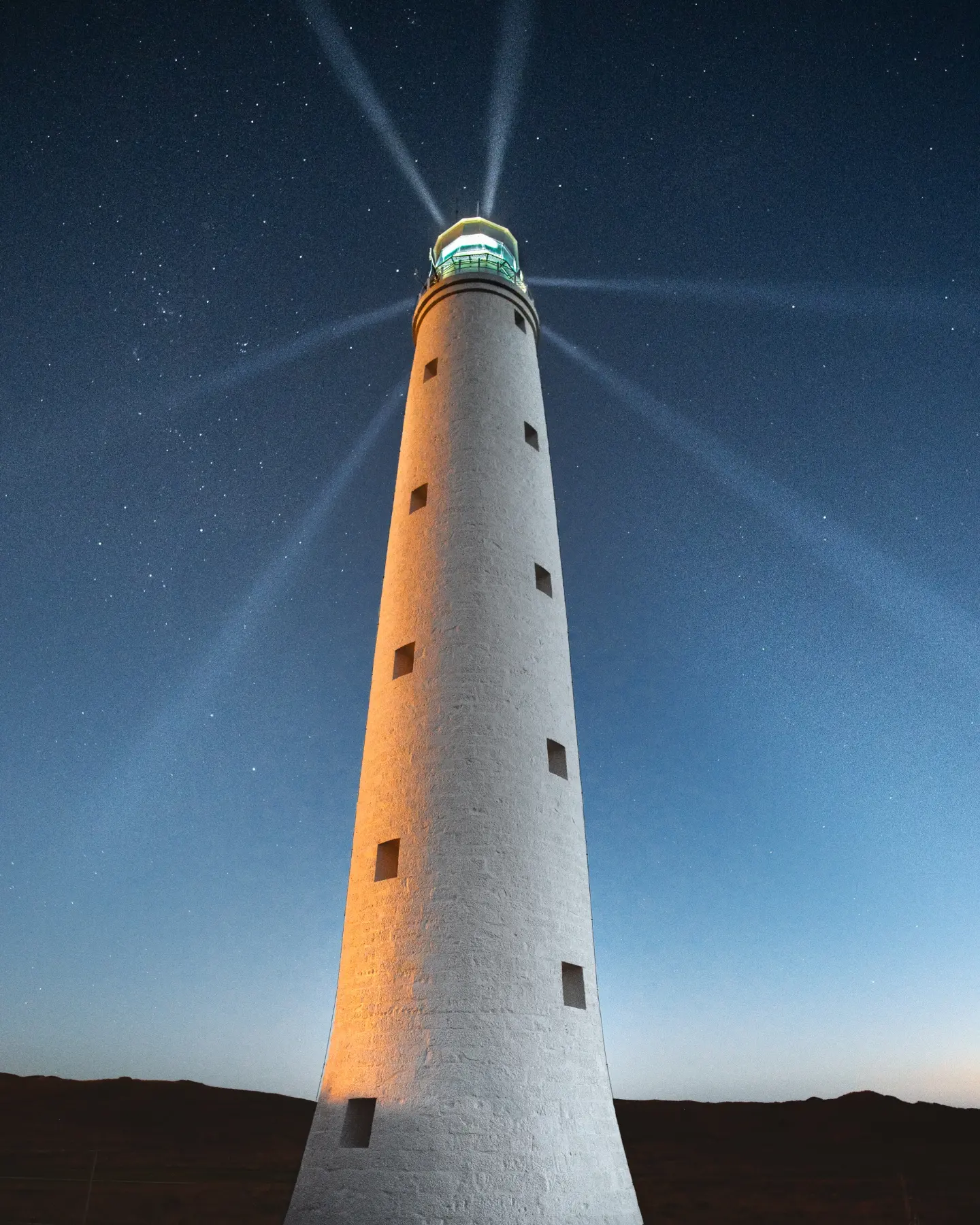
At the northern tip of the island, Cape Wickham Lighthouse rises 48 m above the coast and is the tallest lighthouse in Australia. It was built in 1861 after a succession of Bass Strait wrecks, including the 1845 loss of the Cataraqui, when around 400 people died on King Island's west coast.
The tower itself is not currently open to visitors, but the reserve grounds are. There is parking, a picnic area and toilets, and the coastline around the lighthouse is enough reason to make the roughly 47 km drive north from Currie.
The lighthouse also makes more sense when seen as part of an island-wide navigation story. Cape Wickham's original lens is now held at King Island Museum in Currie, while Currie's own lighthouse was later built so vessels could distinguish the two sides of the island.
Currie, the lighthouse and museum
Currie is the island's practical centre, but it is worth exploring rather than using only for groceries and fuel. The 1879 iron Currie Lighthouse stands above the harbour and can be climbed on selected guided tours, using its 93-step spiral staircase for views over the west coast.
Beside it, King Island Museum occupies the former lighthouse keeper's cottage. The collection covers shipwrecks, sealers, farming, soldier settlement and island life, and includes the original Cape Wickham lens. The museum is volunteer-run, so check current opening days rather than assuming it will be open whenever you arrive.
Bicentennial Lookout and the harbour are easy additions if you have an hour in town, particularly towards sunset.
Seal Rocks and the Calcified Forest
The south-west corner is the island's wildest road-trip section. At Seal Rocks State Reserve, an easy 80 m path leads to a lookout above cliffs rising about 60 m from the Southern Ocean. From here the next land west is thousands of kilometres away across open ocean.
If you want more than the viewpoint, the Clifftop-Copperhead walk runs for about 3.5 km and takes roughly 1.5 hours return. The route follows exposed clifftops, so wind and footing matter more than the modest distance.
Nearby, the Calcified Forest is a 1.3 km, Grade 2 return walk taking about 30 minutes. The strange limestone columns are the mineralised root systems of an ancient forest, exposed after surrounding sand was blown away. Parks and Wildlife Service dates the formation to about 7,000 years ago.
Lavinia State Reserve and the east coast
King Island's east coast is a complete contrast. Lavinia State Reserve protects more than 7,000 ha of native vegetation, lagoons, wetland and surf coast and is internationally significant under the Ramsar Convention.
Penny's Lagoon is one of only a small number of perched lakes in the world: freshwater sits above the surrounding water table, held by compacted sand and organic material rather than an inflowing river. There are picnic facilities, barbecues and a toilet, making it an easy stop on a northern drive.
Further south, the Sea Elephant River has a short 600 m return Grade 2 walk to a bird hide through wetland and saltmarsh habitat. Martha Lavinia Beach, on the reserve's north-east coast, is famous among surfers, but it is just as worthwhile for a long beach walk when conditions are calmer.
Golf, even if you are not here only for golf
King Island has become one of Australia's major golf destinations. Cape Wickham and Ocean Dunes are both links-style courses cut into the Bass Strait coast, with Cape Wickham regularly ranked among Australia's best courses and Ocean Dunes also sitting high in national rankings.
If you play, build the trip around booked tee times and leave a buffer for wind. If you do not, the courses still explain why so many visitors now reach parts of the coastline that once saw relatively little tourism. The local nine-hole course at Currie offers a more informal option.
Food worth planning for
The island's food reputation is justified, but good meals require more forward planning than they do in a city. Local beef, crayfish, seafood and cheese are the obvious things to seek out, while the King Island Bakehouse's crayfish pie has become a reliable Currie institution.
Opening days vary, some kitchens close when numbers are low, and crayfish can sell out. Book dinner or order ahead when a particular meal matters to you rather than assuming there will always be a late option.
The island's dairy tradition also remains part of the food story, with the King Island Dairy cheese store currently operating on the island. Check its current hours before making a special trip.
Grassy and the south-east
Grassy is a small former mining town on the south-east coast and the island's other main eating and service area. The harbour is particularly worthwhile around dusk, when little penguins come ashore.
Watch quietly, keep your distance, avoid flash or bright lights and position the car so you do not need to reverse after dark. The same caution applies on the drive back: wildlife activity increases markedly after sunset.
For a quieter daytime stop, Naracoopa on the east coast gives you a long beach, jetty and a calmer side of the island than the cliffs around Seal Rocks.
How much time to allow
Three days is the minimum that gives King Island room to breathe. One day can cover Cape Wickham and the north, one can focus on Currie and the west coast, and one can take in Seal Rocks, the Calcified Forest and the east or south-east.
Four or five days is better if you are playing golf, want to follow the weather rather than fight it, or plan to spend meaningful time on beaches, at the museum and around Lavinia State Reserve. Golfers should add a buffer day where possible because the same wind that defines the courses can also reshape a schedule.
Food, museum hours and tours are not uniformly seven-days-a-week, so check them before arrival. The best King Island itinerary fixes only the things that need bookings, then leaves enough room to change direction with the weather.
Practical notes
- Book a hire car before arrival. King Island has no public transport, taxi or rideshare network for general touring.
- Telstra is the only mobile provider operating on the island and coverage is not universal.
- Avoid unnecessary night driving because wildlife is common on island roads after dark.
- Opening days for restaurants, the museum and tours vary. Book important meals and activities rather than assuming seven-day trading.
- Cape Wickham Lighthouse grounds can be visited, but the tower itself is not currently open to visitors.
- Weather and wind can alter golf and coastal plans quickly, so leave some flexibility in a multi-day itinerary.
A suggested plan
Use one day for Cape Wickham and the north, one for Currie and the west coast, and one for Seal Rocks, the Calcified Forest and the south-east. With extra days, add Lavinia State Reserve, golf or slower food and beach stops according to the weather.