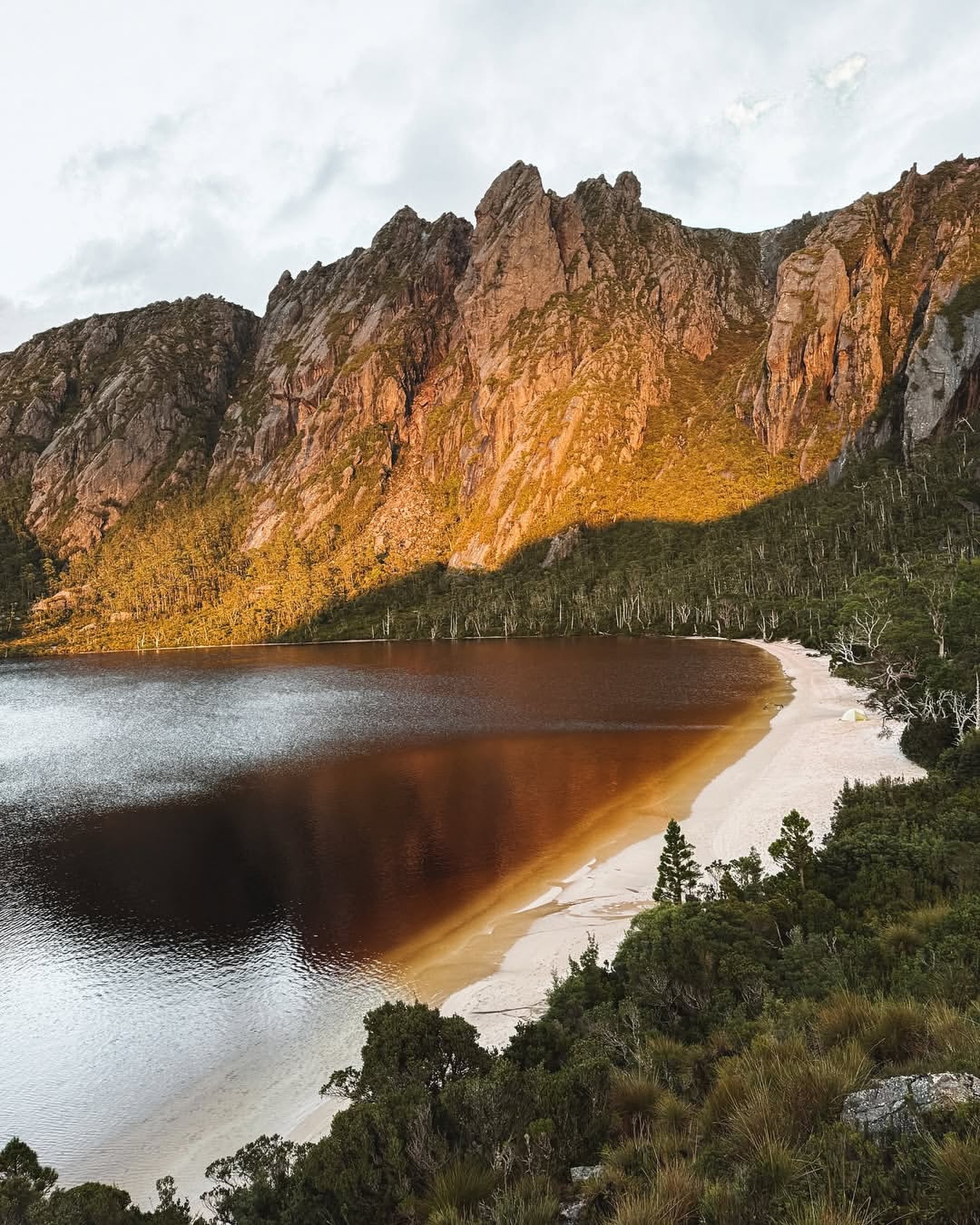
Lake Rhona is visually delicate and logistically unforgiving. The pale quartzite beach and dark water sit in a high basin of the Denison Range, but the decisive part of the trip often happens far below at the Gordon River.
The walk is only 28 km return, yet Parks Tasmania classifies it Grade 4 and recommends two to three days. The river crossing, mud, exposed climb and absence of huts make distance a poor measure of difficulty.
How to get there
The walk starts from Richea Creek carpark in the Franklin-Gordon Wild Rivers National Park. The approach is remote, so check current road conditions before leaving the Maydena area and do not assume services will be available near the trailhead.
Walker registration is required before departure.
What to see and do
The Gordon River crossing
The track reaches the Gordon River in under an hour. At lower water levels, the crossing is a roughly 50 m wade. After heavy rain or snowmelt it can become difficult or impossible, and this is the point where a safe trip may need to stop.
Buttongrass and the climb
Beyond the river, the track crosses muddy buttongrass and dry forest before a steep 2 km climb. Lake Rhona sits about 300 m above the valley floor, so the final approach is much more sustained than the early kilometres suggest.
The lake and quartzite beach
The pale beach is the defining scene: quartzite sand against tannin-dark water and a ring of high country. Campsites are set behind the dunes to protect the shoreline and fragile vegetation.
How much time to allow
Two days works in stable conditions: walk in, camp, and return the next day. Three days is the safer default because it creates time for the lake itself and a buffer if the Gordon River rises.
Carry enough food to wait. Parks Tasmania specifically warns walkers to be prepared to camp until the river falls rather than attempt an unsafe crossing.
Practical notes
- Registration is required for the Lake Rhona walk.
- Do not cross the Gordon River after heavy rain or when moderate to heavy rain is forecast during the trip.
- The Gordon River is the last major fresh-water stop before Lake Rhona.
- There are no huts. Carry a full tent and all overnight equipment.
- If waiting for the river to fall, camp well back from the river because the crossing area can flood quickly.
- Pack extra food and be prepared to turn back.
A suggested plan
Use a three-day window even if you expect to walk in and out over two days. Cross the Gordon only when it is clearly safe, reach the lake with enough daylight to camp behind the dunes, and keep the third day available as a weather or river-level contingency.