
Maria Island works best when you resist trying to cover all of it. For a first day trip, the northern end around Darlington already brings together the island's wildlife, convict history and two of its most distinctive coastal landscapes.
From the ferry, wombats and wallabies are often visible around the open grasslands. Fossil Cliffs runs north from Darlington, while Painted Cliffs sits to the south and needs to be timed around low tide. Together they make a natural day on foot without turning the island into a checklist.
How to get there
Maria Island is reached by passenger ferry from Triabunna on Tasmania's east coast. The crossing to Darlington takes about 45 minutes, and ferry bookings are essential.
There is no public vehicle access on the island. Leave the car in Triabunna and explore on foot or by bike once you arrive.
If you are travelling from Hobart, allow roughly 90 minutes to reach Triabunna before ferry check-in. The Maria Island Gateway sits beside the departure point and is the useful place to confirm ferry, tide and park information before crossing.
Do not treat the return ferry as flexible. Check the day's timetable before leaving Triabunna and know the time of the final sailing back.
What to see and do
Darlington
The ferry arrives at Darlington, and it is worth spending some time here before setting off along the coast.
The township walk is only about 1 km, but Darlington's convict buildings and ruins give the island useful context before the longer coastal walks. The precinct forms part of the Australian Convict Sites World Heritage property.
Infrastructure works are currently taking place around Darlington and are expected to continue until November 2026, so some machinery, noise and temporary visitor directions should be expected.
Wildlife around Darlington
Maria Island's wildlife is difficult to miss. Wombats, Bennett's wallabies, Forester kangaroos, pademelons, Cape Barren geese and Tasmanian native hens are all commonly seen around the northern part of the island.
The better approach is not to chase encounters. Stay at least 2 metres from wildlife, even when an animal appears comfortable around people. The open grassland around Darlington is often enough for good sightings without leaving the main visitor area.

Fossil Cliffs
The Fossil Cliffs circuit is 4.5 km from Darlington and normally takes around 1 to 2.5 hours.
The walk follows the northern side of the island to cliffs containing dense marine fossils deposited around 300 million years ago. The rock shelf below gives the clearest view of the fossil layers, while Bishop and Clerk rises behind the coastline.
This is the better of the two cliff walks if the tide does not suit Painted Cliffs.
Painted Cliffs
Painted Cliffs lies south of Darlington on a 4.3 km return walk.
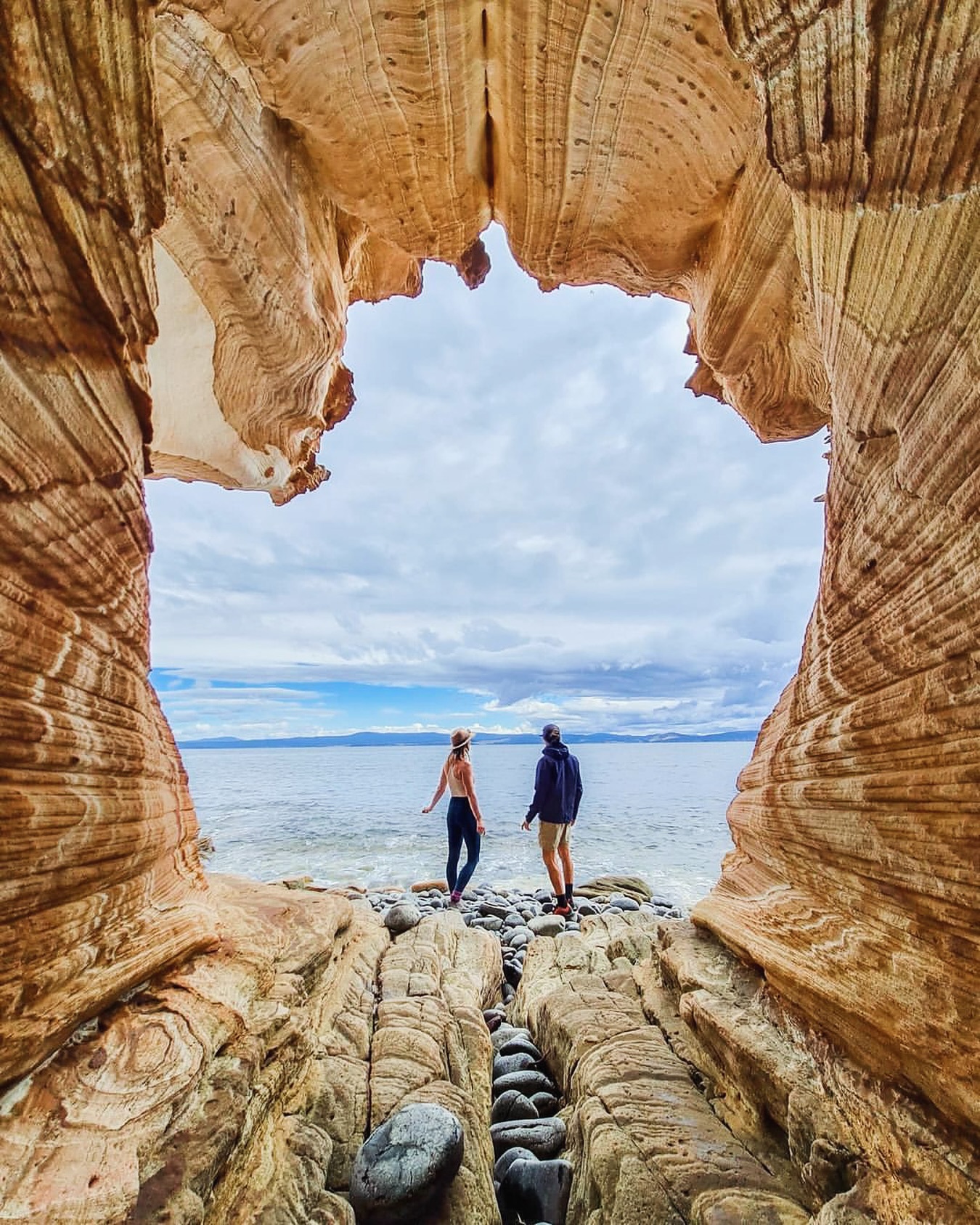
The sandstone has been stained by groundwater and shaped by salt, wind and waves into bands, swirls and honeycomb textures. The rock platform at the base of the cliffs is the reason to go, but access is tide dependent.
Plan to reach the platform within about two hours of low tide and only in calm sea conditions. The rock can be slippery and the cliffs are unstable, so stay away from the cliff face and do not attempt to approach from above.
Bishop and Clerk
Bishop and Clerk deserves a place in the guide, but as an alternative day rather than an extra stop.
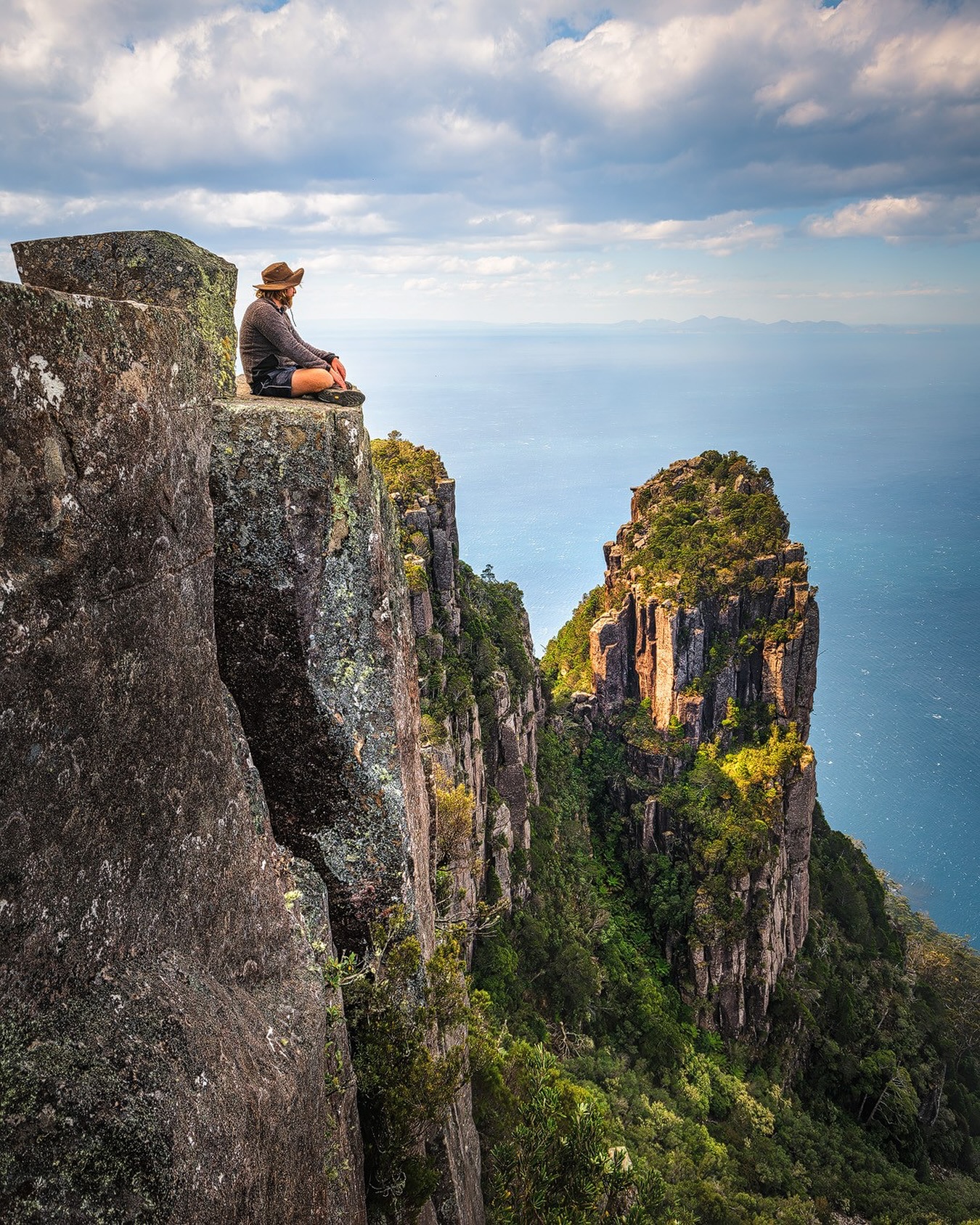
The 11 km return Grade 4 walk takes about 4 to 5 hours and finishes with steep boulders and exposed rock scrambling near the summit. Strong winds make the upper section particularly hazardous.
If Bishop and Clerk is your main reason for visiting Maria Island, give the walk most of the day and leave Painted Cliffs and Fossil Cliffs for another visit rather than trying to force everything into one ferry window.
How much time to allow
A full day is the right amount of time for a first visit.
With an early ferry, Darlington plus Fossil Cliffs and Painted Cliffs can fit comfortably into the day if the tide works in your favour. The two coastal walks together account for almost 9 km before time spent around Darlington, wildlife sightings and stops along the coast.
If low tide falls early in the day, reverse the order and head south first.
Bishop and Clerk should be treated as a separate full-day walking plan.
Practical notes
- Ferry bookings are essential, and the crossing takes about 45 minutes.
- A valid Tasmania parks pass is required.
- There are no shops or cafes on Maria Island. Bring enough food for the day.
- Water available on the island is not potable and must be treated before drinking. Arrive with a full bottle from the mainland.
- Take all rubbish back with you.
- Stay at least 2 metres from wildlife and do not feed animals.
- Painted Cliffs is tide dependent and should only be approached in calm conditions around low tide.
- Current Darlington infrastructure works are expected to continue until November 2026.
A suggested plan
Take an early ferry from Triabunna and spend a short time around Darlington after arriving. Walk the Fossil Cliffs circuit in the morning, return through Darlington for lunch, then head south to Painted Cliffs when the tide is suitable.
If low tide falls early, reverse the order. Keep Bishop and Clerk for a visit when the summit walk itself is the plan.