
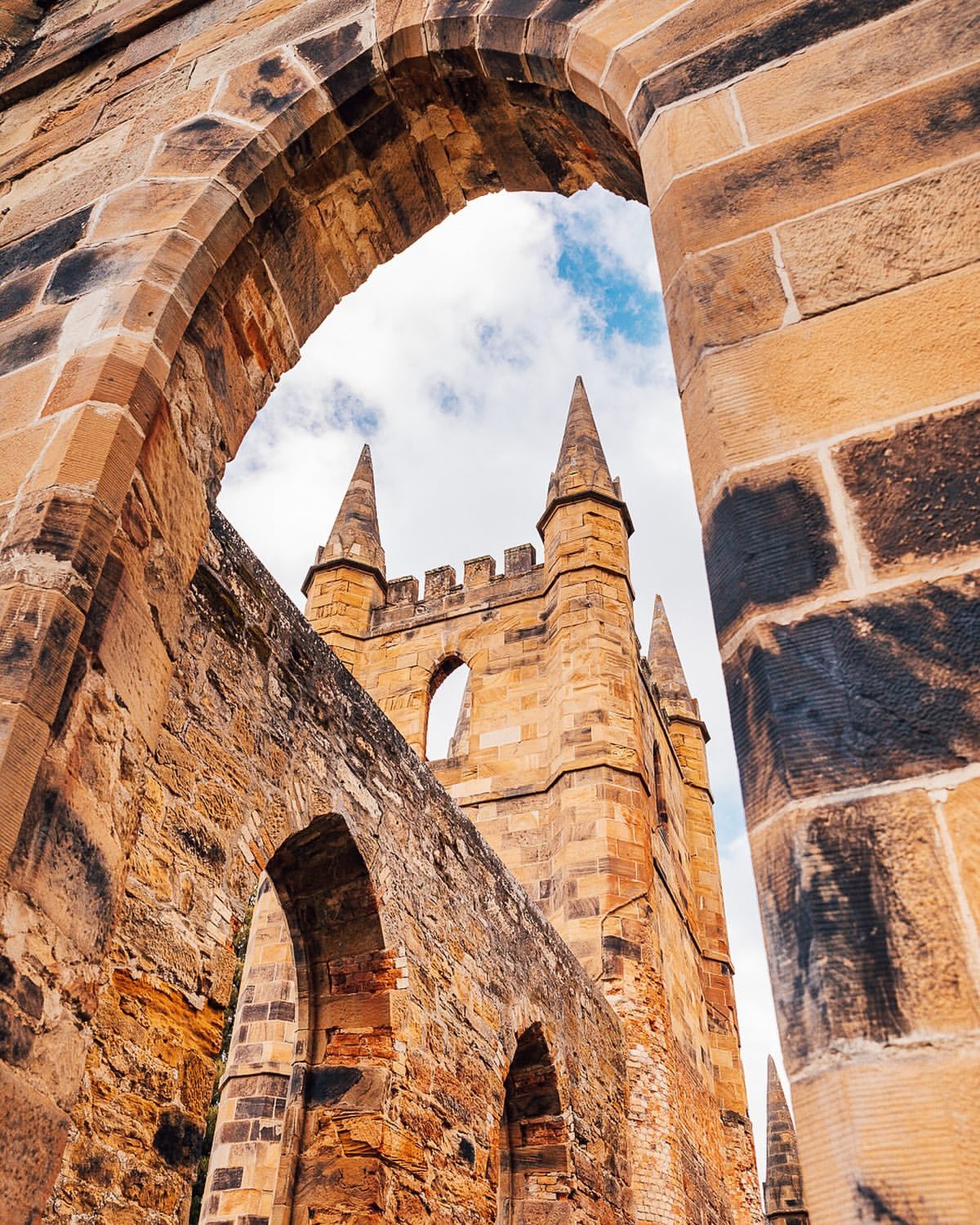
Port Arthur is not best understood as a collection of picturesque sandstone ruins. It was an industrial penal settlement, a place of forced labour and punishment, a community where officers and families also lived, and later a major heritage site with its own difficult modern history.
Give it enough time for those layers to emerge. General admission includes more than 30 buildings, ruins and restored houses, a harbour cruise and short guide talks across the site.
How to get there
Port Arthur Historic Site is about 95 km and roughly 90 minutes from Hobart via the Tasman and Arthur highways. Parking and the main visitor centre are at the entrance to the site.
Pre-booking is the sensible choice, particularly if you want an additional guided experience. General admission is currently structured for self-guided exploration and includes a complimentary 20-minute harbour cruise plus free 10 to 15-minute talks at changing locations through the day.
Wear shoes suitable for several hours outside. The site is large, sloping in places and exposed to Tasman Peninsula weather.
What to see and do
Start with a guide talk
Before walking straight to the Penitentiary, check the day's free talk schedule. Short talks are offered at places including the Commandant's House, Penitentiary, Convict Church, Separate Prison and Point Puer exhibition. One well-chosen talk gives far more context to the buildings that follow.
The Penitentiary
The Penitentiary began as something else entirely. It was built as a flour mill and granary in 1845, using water power and, when water was inadequate, convict treadmill labour. The mill failed to meet expectations and was converted into the four-storey Penitentiary between 1854 and 1857.
The lower floors held 136 separate cells, while the upper level contained a large dormitory. Knowing that history changes the building from a dramatic ruin into evidence of how Port Arthur repeatedly adapted industry, punishment and accommodation to control the convict population.
The Separate Prison
The Separate Prison represents a different philosophy of punishment. Silence, isolation and psychological control replaced much of the earlier reliance on physical punishment. The surviving cell arrangement, exercise yards and chapel make this one of the most important places on the site to slow down and read the interpretation.
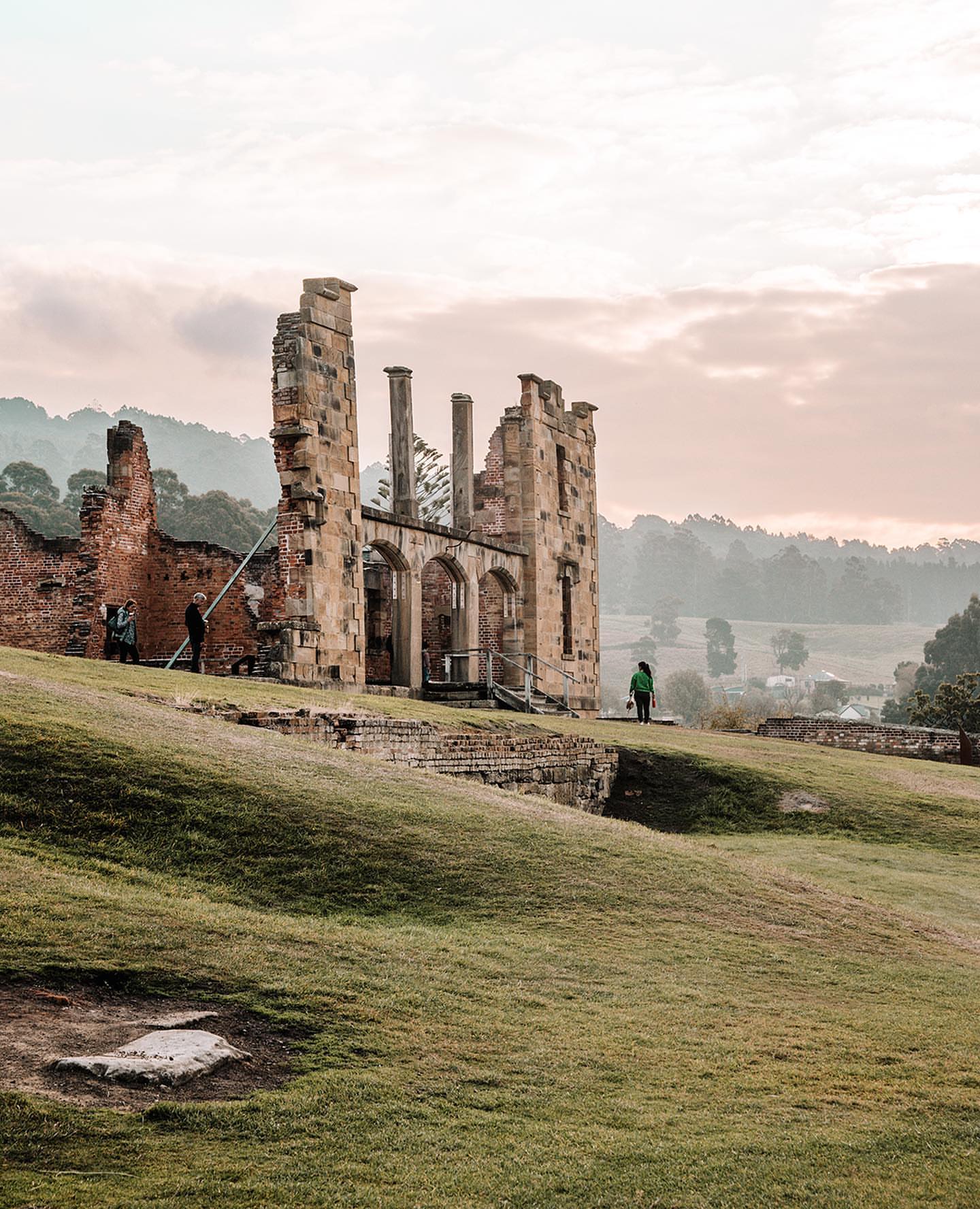
The Convict Church and Commandant's House
The roofless Convict Church is one of Port Arthur's defining structures, but pair it with the Commandant's House rather than viewing the church alone. The contrast between institutional buildings and the domestic spaces of senior officers shows how sharply life differed across the settlement.
Point Puer
Point Puer, across the harbour, was the first purpose-built juvenile prison in the British Empire. You do not need a separate island landing to understand its story: the site's interactive Point Puer exhibition is included in general admission and follows the lives, work and punishment of transported boys.
The harbour
Take the included harbour cruise. From the water, the geography of the settlement becomes clearer and the relationship between Port Arthur, Point Puer and the Isle of the Dead is easier to understand.
If burial history is a particular interest, the Isle of the Dead tour is an additional booked experience rather than part of standard admission.
The 1996 Memorial Garden
Port Arthur's history also includes the mass shooting of 28 April 1996, when 35 people were killed in and around the site. The Memorial Garden incorporates the shell of the Broad Arrow Café and is intended as a place of remembrance and quiet reflection.
Visit it with that purpose in mind. It should not be treated as another photo stop.
How much time to allow
Allow at least half a day. The Historic Site itself advises that most visitors spend between half and a full day, and that is realistic once you include a talk, the harbour cruise and several major buildings.
A full day is worthwhile if you read the interpretation closely, add a longer guided tour or visit the memorial and gardens without rushing. If Port Arthur is the main destination, keep the rest of the Tasman Peninsula itinerary selective.
Practical notes
- General admission includes access to more than 30 buildings, ruins and restored houses, a short harbour cruise and scheduled introductory talks.
- Some experiences, including the Isle of the Dead tour, cost extra and may need advance booking.
- The site is large and mostly outdoors, so wear comfortable shoes and bring weather protection.
- Allow enough time between fixed tours to explore the Penitentiary, Separate Prison and Settlement Hill rather than rushing between bookings.
- The 1996 Memorial Garden is a place for quiet reflection and should be treated differently from the interpretive attractions around it.
A suggested plan
Begin with an introductory talk, then work through the Penitentiary and Separate Prison before continuing up Settlement Hill to the Hospital, church and Commandant’s House. Take the included harbour cruise partway through the visit, then use the remaining time for Point Puer interpretation, an optional Isle of the Dead tour or the Memorial Garden.