
Wynyard, Fossil Bluff and Table Cape belong in one guide because each adds something different within a very small area: a river town, a remarkably readable geological headland and a volcanic plateau high above Bass Strait.
You can drive between the main stops quickly. The better visit leaves the car for short walks at each one.
How to get there
Wynyard sits on the Bass Highway west of Burnie. Fossil Bluff is only a few minutes from the town centre at the end of Freestone Crescent, while Table Cape is roughly a ten-minute drive west.
A useful sequence is Wynyard waterfront, Fossil Bluff, Table Cape Lookout and then the lighthouse. At Table Cape you can park at the lookout and use the clifftop walking track for the final section rather than moving the car for every viewpoint.
What to see and do
Wynyard and the Inglis River
Start around the Inglis River and waterfront for coffee, supplies and a sense of the town before heading onto the headlands. If you want a longer town walk, the Inglis River trail system extends for about 12 km; there is no need to complete the whole route for this itinerary.
The Wonders of Wynyard information centre is useful if you need current lighthouse-tour or tulip-season information.
Fossil Bluff
Fossil Bluff is far more interesting than its name alone suggests. The headland is built from about 23-million-year-old fossil-bearing sandstone sitting above much older Wynyard Tillite, deposited by glaciers roughly 303 to 293 million years ago when Australia formed part of Gondwana. A basalt cap from the Table Cape volcanic flow sits above the younger sandstone.
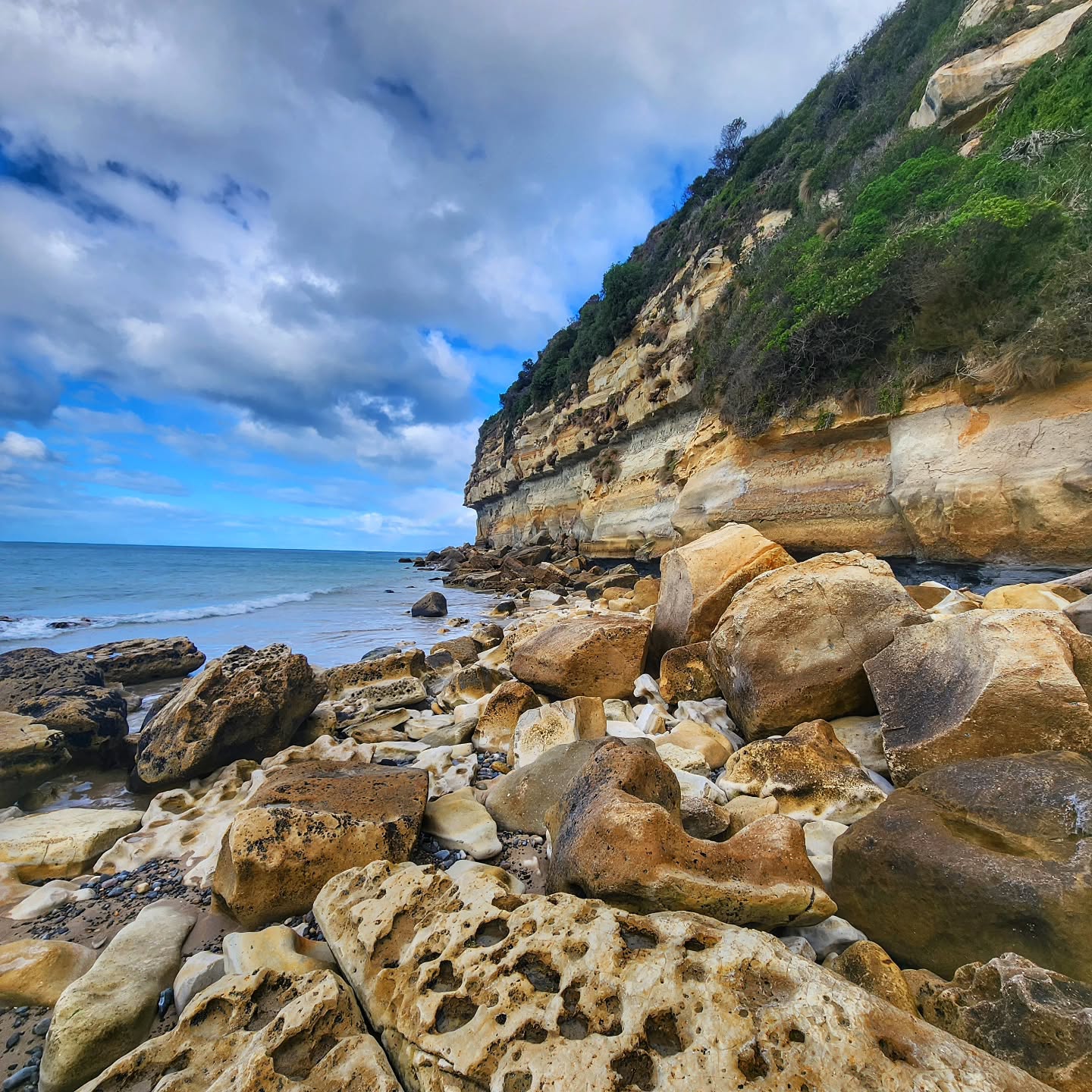
At low tide you can walk around the base and see where the sandstone and tillite meet. A short walkway also reaches the top for broader coastal views. Picnic tables sit near the beach and seating is available above the bluff.
Look closely, but leave the site intact. Waratah-Wynyard Council specifically asks visitors not to remove fossil specimens.
Table Cape
Table Cape is a volcanic bluff rising about 180 m above the sea. From the lookout, the view runs across Bass Strait, surrounding farmland and towards Rocky Cape in clear conditions. Migrating whales can also be seen from the headland in season.
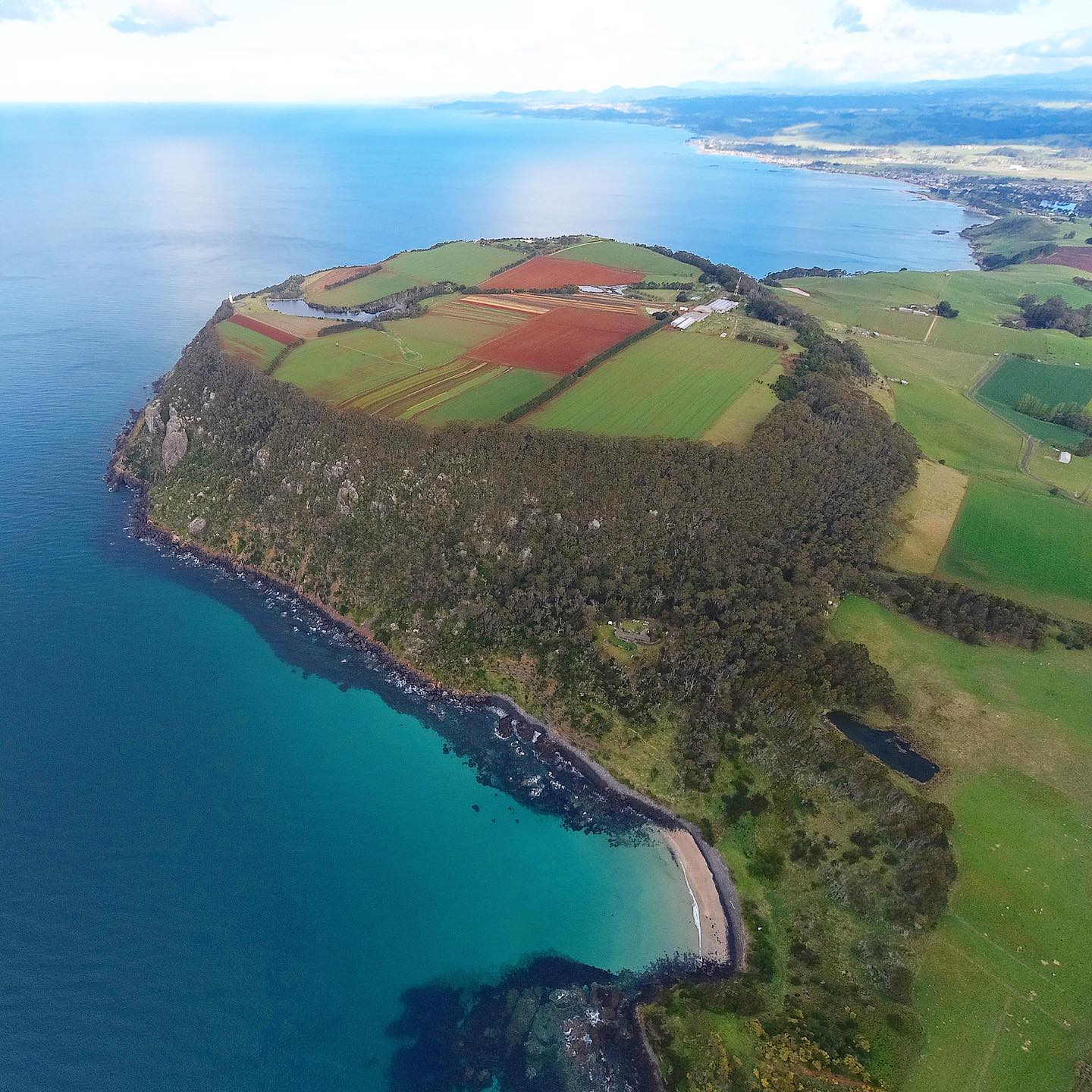
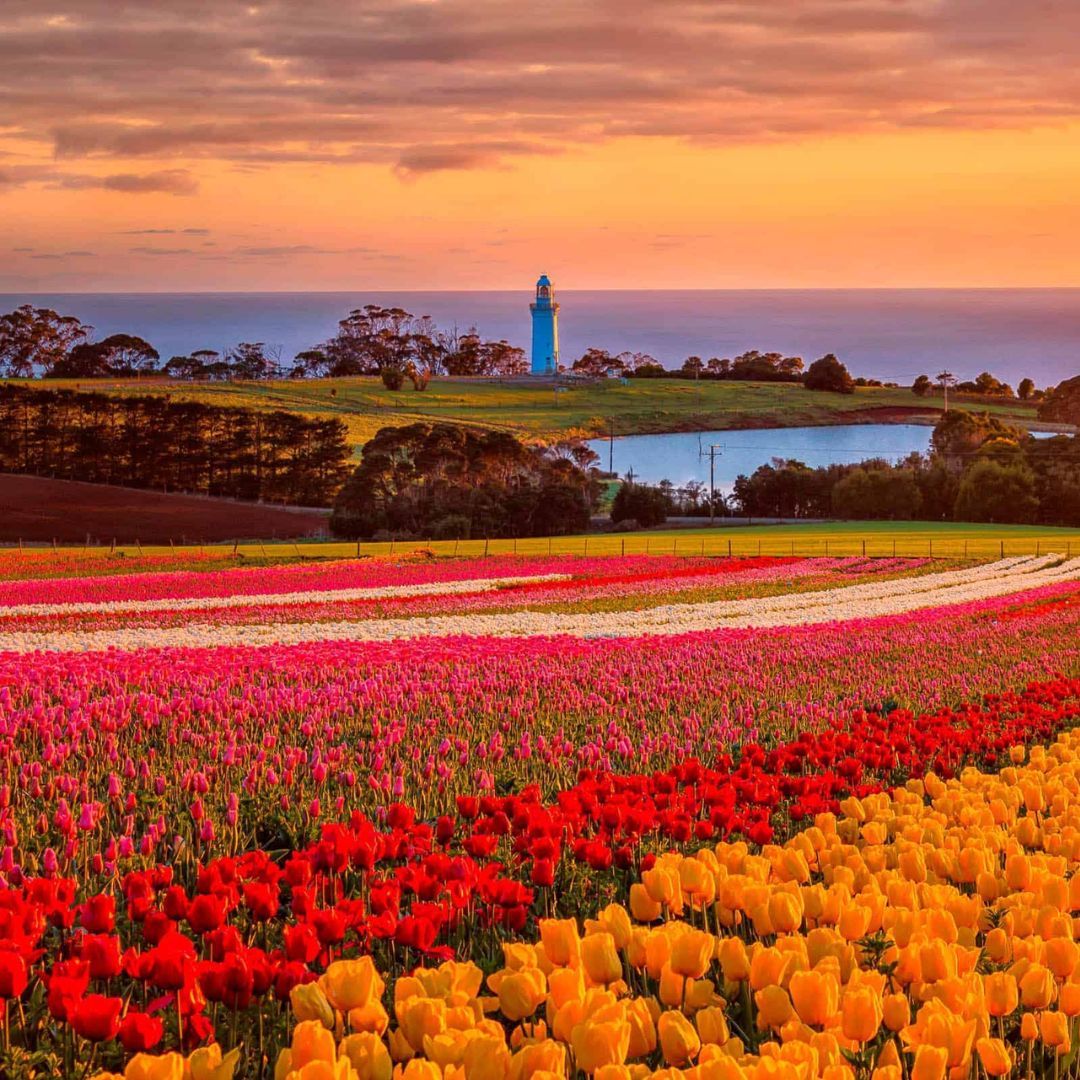
The plateau is famous for spring tulips, but the cape is worth visiting outside the flower season. The cliff edge, lighthouse and coastal walking are the more durable reasons to come.
Table Cape Lighthouse
The lighthouse was built in 1888 near the edge of the plateau. Guided tower access operates only at selected times of year, so check the current schedule if going inside matters to you.
Outside tour times, the surrounding headland remains accessible. Free parking and picnic tables are available at Table Cape visitor areas.
How much time to allow
Allow half a day for Wynyard, Fossil Bluff and Table Cape without rushing. Two hours is possible, but it leaves little time for the low-tide geology or clifftop walk.
In spring, allow extra time for tulip traffic and any ticketed flower visit. If Fossil Bluff is a priority, check the tide so the lower geology is safely visible rather than arriving at high water.
Practical notes
- Low tide gives the best access to the lower geology at Fossil Bluff. Do not remove fossils or rock specimens.
- Table Cape is exposed to coastal wind and cliff edges should be approached conservatively.
- Table Cape Lighthouse tower access operates only at selected times, so check the current tour schedule if going inside matters to you.
- Spring tulip season can bring substantially more traffic to Table Cape. Allow extra time if visiting then.
- Wynyard is the practical place for supplies, toilets and current local visitor information before heading onto the cape.
A suggested plan
Start around Wynyard’s waterfront, continue to Fossil Bluff around low tide, then drive onto Table Cape for the lookout and clifftop walk to the lighthouse. In spring, add the tulip fields only if you have allowed for the extra traffic and time.