Cape Pillar is one destination with two very different ways of getting there. The official Three Capes Track is a booked, hut-based four-day experience. Independent walkers can reach the same cape from Fortescue Bay via the Old Cape Pillar Track, carrying their own overnight gear.
Choose between those experiences first. The logistics, facilities and amount of equipment you need are not interchangeable.
How to get there
The official Three Capes Track
The booked track begins with check-in at Port Arthur Historic Site. Walkers then board a purpose-built boat for a cruise of up to 75 minutes before being dropped at Denmans Cove to begin the 48 km route.
The three overnight cabins are Surveyors, Munro and Retakunna. A maximum of 48 walkers depart each day, so this is not a walk to turn up and start spontaneously. The booking includes the track experience and associated transfers; check the current inclusions when booking.
The independent Old Cape Pillar route
Independent walkers start from Fortescue Bay. The Old Cape Pillar Track begins about 300 m back from the campground office along Fortescue Bay Road. The road into Fortescue Bay is 12 km of unsealed road but is suitable for 2WD vehicles.
Parks and Wildlife Service lists the independent route as 29 km return over two to three days, or a 34 km three-day circuit continuing via Mount Fortescue and Cape Hauy. Bare Knoll has 12 dedicated tent platforms and a toilet. Do not rely on natural water sources; carry sufficient water or a reliable treatment plan.
A national parks pass is required for independent walking.
What to see and do
The approach to Cape Pillar
Forest, moorland and coastal heath gradually open towards the eastern cliffs. The changing landscape is part of the walk, not simply the ground between camp and the famous viewpoints.
The Blade and Cape Pillar
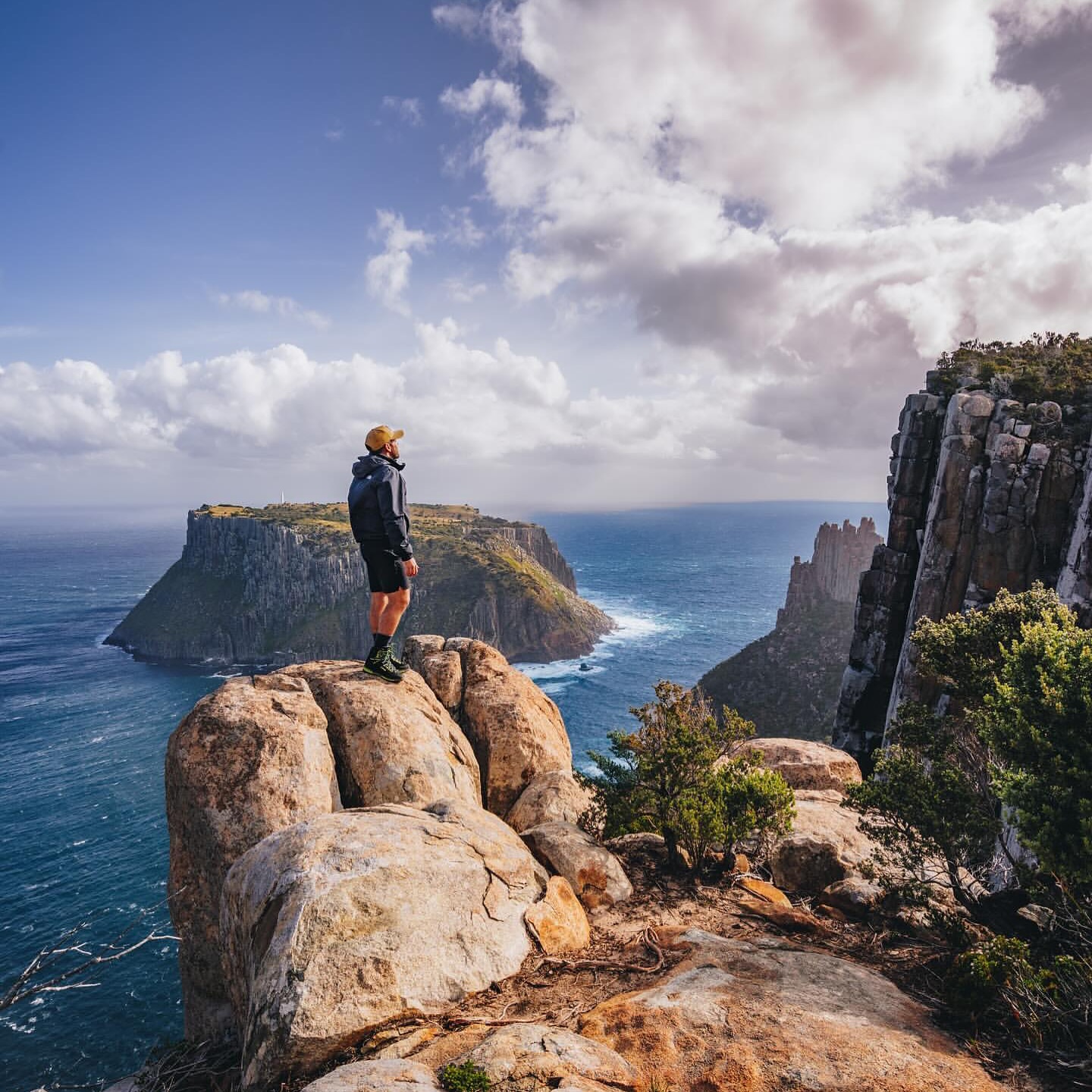
The Blade is the narrow dolerite ridge that gives the classic elevated view towards Tasman Island and the cliffs of Cape Pillar. On the official track, Cape Pillar is the major objective of Day 3: about 19 km and six hours.
A useful design feature of the hut-based itinerary is that walkers return to Munro on the Cape Pillar out-and-back, allowing the main overnight pack to be left at the cabin while the cape is tackled with a lighter day pack.
The cliffs are unfenced and wind can be severe. Parks and Wildlife Service asks walkers to keep at least 2 m back from exposed cliff edges.
Tasman Island
Tasman Island sits directly offshore beyond Cape Pillar, its lighthouse visible across the channels in clear weather. The island provides scale to the cliffs and is a much better reason to pause than treating the Blade as a quick photo platform.
How Cape Hauy fits in
The official Three Capes Track reaches Cape Hauy on Day 4 after crossing Mount Fortescue, then descends to Fortescue Bay. Cape Raoul is the third great geographical cape but is not part of the official Three Capes Track.
Independent walkers choosing the 34 km circuit can also incorporate Mount Fortescue and Cape Hauy, but Parks and Wildlife Service specifies that this section is walked south to north.
How much time to allow
The official experience is fixed at four days and three nights and is intentionally sequenced that way. Day 3 to Cape Pillar is the longest single day, while Day 4 is about 14 km and six to seven hours via Mount Fortescue and Cape Hauy.
For the independent route, allow two to three days for the 29 km return or three days for the 34 km circuit. Do not compress the plan purely because the kilometre figures look modest: overnight gear, exposed weather and cliff-country terrain change the pace.
Practical notes
- Decide first whether you are doing the booked Three Capes Track or the independent Old Cape Pillar route. Their logistics and facilities are different.
- The booked Three Capes Track is 48 km over four days and three nights and starts with check-in at Port Arthur Historic Site.
- Independent walkers need a national parks pass and must carry overnight equipment. Bare Knoll has 12 tent platforms and a toilet.
- Do not rely on untreated natural water. Carry sufficient water or a reliable treatment method.
- The Three Capes Track is a fuel-stove-only area year-round. Seasonal campfire bans also apply to reserved land in Tasman National Park from 26 October 2026. Check the current Parks Tasmania campfire rules and do not plan on using a campfire.
- Keep at least 2 m back from exposed cliff edges and check current track, booking and camping information before departure.
- Register your Bare Knoll overnight stay and walk intentions at the Fortescue Bay Site Office before starting. Wughalee Falls Campsite is closed; do not plan to camp there. Current independent walk requirements.
A suggested plan
For the booked track, follow the four-day hut itinerary and treat Cape Pillar as the major Day 3 objective. For the independent route, start from Fortescue Bay, camp at Bare Knoll, visit Cape Pillar with a lighter pack, then either return the same way or continue the longer three-day circuit via Mount Fortescue and Cape Hauy.