
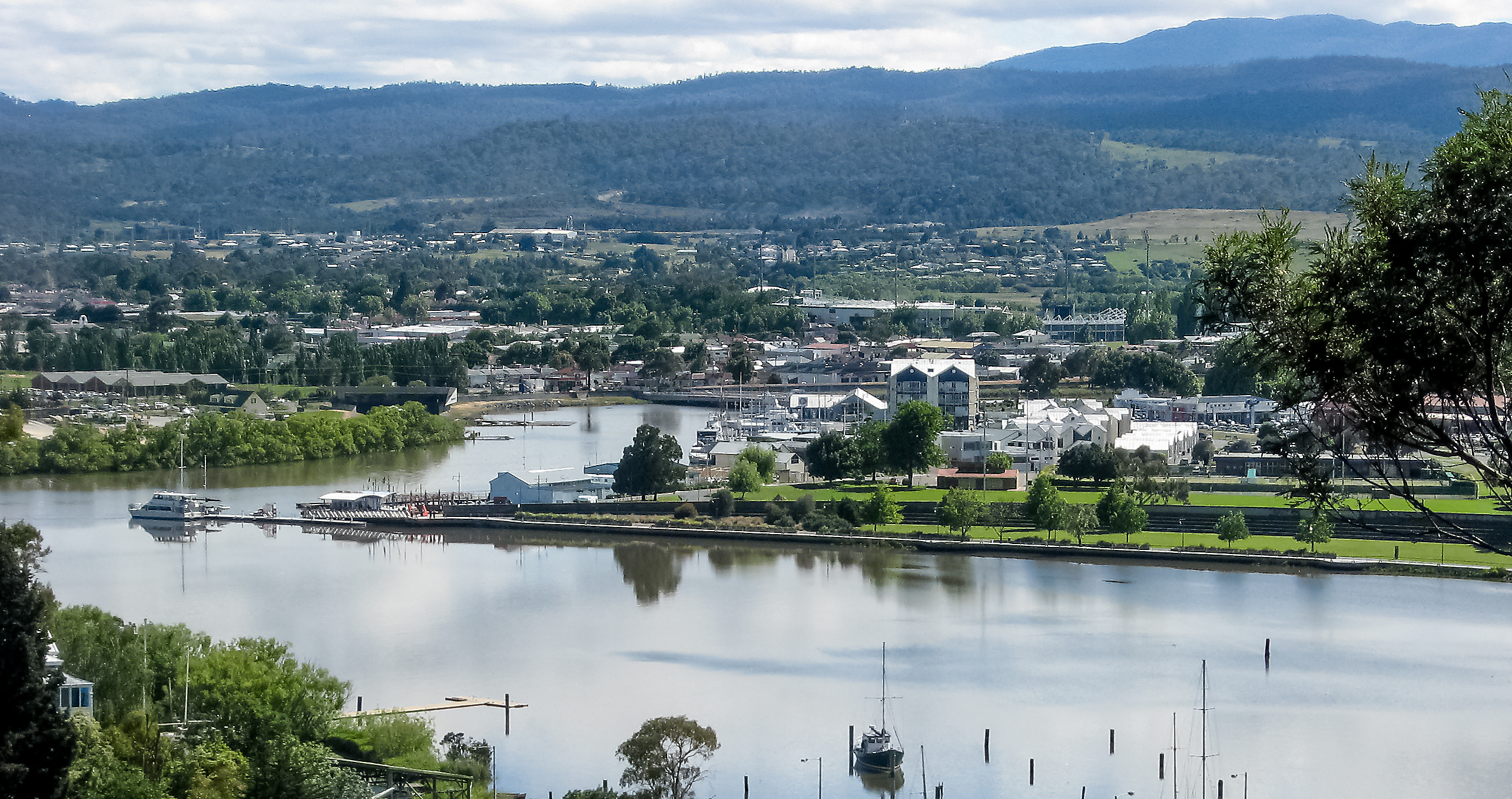
Launceston is one of those cities that makes more sense on foot. The centre is small, the streets climb just enough to reveal the surrounding hills, and the North and South Esk rivers meet at its edge to form the kanamaluka / Tamar estuary.
Cataract Gorge is the city's most famous natural landmark, but it should not stand in for Launceston itself. The city centre has a different rhythm: nineteenth-century architecture, mature parks, two QVMAG sites, riverfront paths and a food culture that became part of the UNESCO Creative Cities Network in 2021.
How to get there
Launceston Airport is 15 km south of the city. There is currently no public bus between the airport and central Launceston; taxis, rideshare services, minibus transfers and hire cars are the practical options.
From Hobart, the 176 km Midland Highway takes about two and a half hours without substantial stops. If you are already staying in central Launceston, however, leave the car parked for the city itself. The core between City Park, Civic Square, Royal Park and the river is compact enough to walk.
Council operates both on-street and off-street paid parking around the CBD. If you are arriving for the day, park once and explore from there rather than moving the car between city stops.
What to see and do
Walk the heritage centre
Launceston was established in 1806 and is Australia's third-oldest city. That age is unusually visible in the centre, where Georgian, Victorian and Federation buildings sit within a street grid that is still easy to explore on foot.
Do not treat the heritage as a list of façades. Start around Cameron Street and Civic Square, then wander through the adjoining city blocks and let the changes in scale, materials and shopfronts do the work. The Launceston Visitor Information Centre has a self-guided heritage walk if you want a more structured route.
City Park and Design Tasmania
City Park is the easiest place to slow the city down. The mature garden contains the John Hart Conservatory, duck pond, broad lawns and the Japanese macaque enclosure. The macaques have been part of the park since 1981, when they arrived through Launceston's sister-city relationship with Ikeda in Japan.
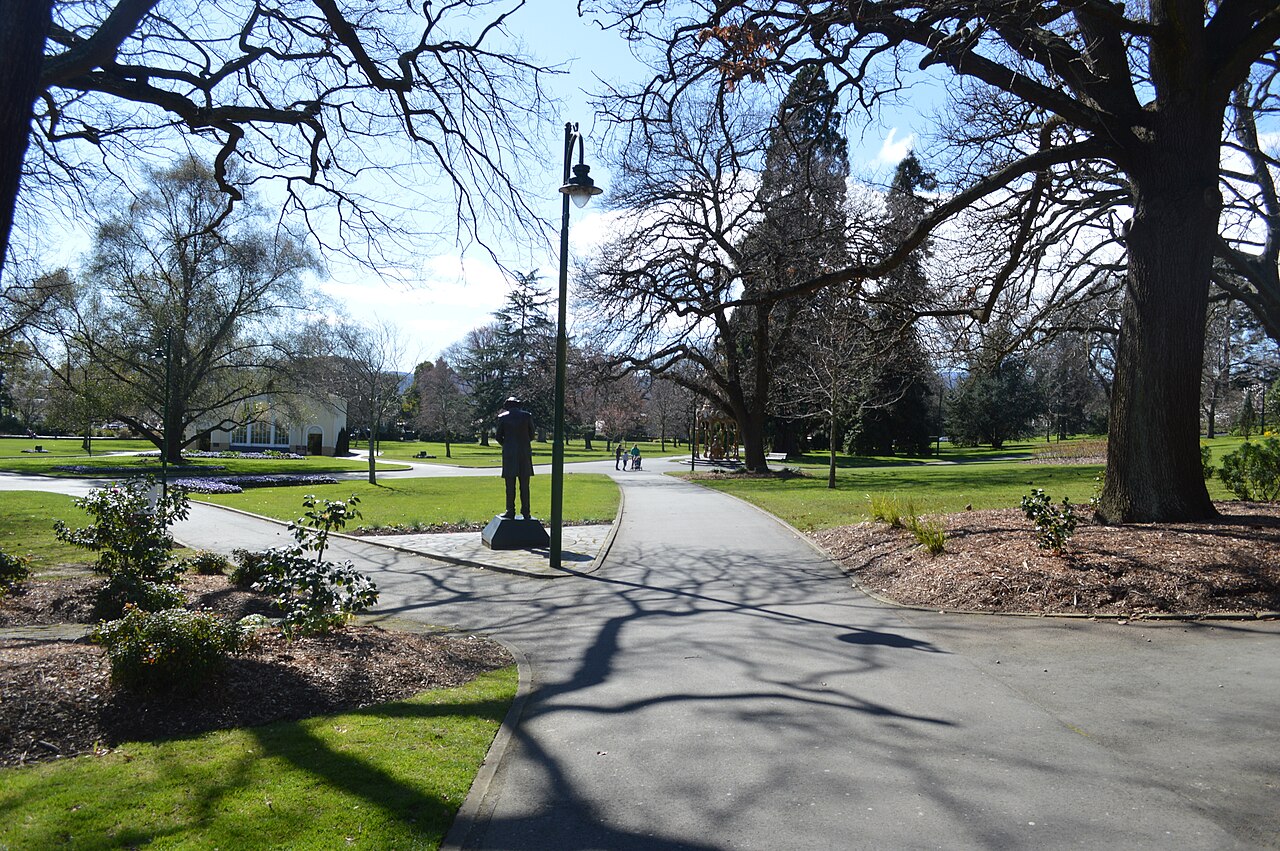
Across the road, Design Tasmania gives the stop a very different character. The not-for-profit design centre has operated since 1976 and focuses on Tasmanian craft and contemporary design. Its opening days are more limited than the park's, so check before building the day around it.
QVMAG at Inveresk and Royal Park
Launceston's museum and art collection is split across two sites. The Museum at Inveresk occupies the former railway workshop precinct north of the city centre, while the Art Gallery sits at Royal Park beside the river.
General admission is free at both. They are close enough to treat as one city experience: QVMAG describes the walk between them as a flat 20 to 40 minutes along the Tamar and North Esk rivers. The Museum at Inveresk also contains the Launceston Planetarium, which has separate ticketed sessions.
Follow the river edge
The waterfront is where Launceston's geography becomes obvious. The North Esk and South Esk meet beside the city and continue north as the kanamaluka / Tamar estuary. Paths around Royal Park, Seaport and the North Esk let you stay close to that water without turning the visit into a formal hike.
This is also the most natural connection between the two QVMAG sites. Rather than driving from museum to gallery, use the river walk when the weather is good and let the city unfold between them.
Make time for the food
Launceston joined the UNESCO Creative Cities Network as a City of Gastronomy in 2021. The designation makes sense on the ground because the city is the urban centre for a much larger northern Tasmanian food region of farms, vineyards, orchards, dairies and producers.
On Saturday mornings, Harvest Market is the clearest expression of that connection. It runs from 8.30 am to 12.30 pm at 71 Cimitiere Street and brings growers and food producers into the centre. If you are in Launceston on a Saturday, it is worth building the first part of the day around the market rather than adding it as an afterthought.
On other days, the better approach is not to chase a long restaurant checklist. Leave enough time for lunch, coffee or a wine bar and choose somewhere that is actually open when you visit.
Cataract Gorge
Cataract Gorge begins only a short walk from the city centre, but it deserves more than a paragraph inside a general Launceston article. First Basin, the suspension bridges and the longer route towards Duck Reach form a substantial destination in their own right.
If the gorge is part of your visit, use the separate Experience Tasmania Cataract Gorge guide and give it its own block of time rather than rushing there between museum stops.
How much time to allow
A full day is the right baseline for Launceston itself. That gives you time to walk the heritage centre, spend time in City Park, visit at least one QVMAG site, follow part of the riverfront and stop properly for food.
On a Saturday, Harvest Market makes the morning busier but also gives the day a stronger structure. If museums are a priority, both QVMAG sites can fit into the same day because they are close and connected by a flat river walk.
Two days is better if you also want to explore Cataract Gorge without compressing the city. It also gives you room to use Launceston as the starting point for the Tamar Valley rather than treating that drive as an extension of an already full city day.
Practical notes
- Launceston Airport is 15 km south of the city and currently has no public bus connection to the CBD. Taxi, rideshare, minibus transfer or hire car are the practical choices.
- The central city is walkable, but some streets are noticeably hilly. Comfortable shoes matter more than the total distance suggests.
- QVMAG's Museum at Inveresk and Art Gallery at Royal Park are both open 10 am to 4 pm daily with free general admission, except Good Friday and Christmas Day. Planetarium sessions are ticketed separately.
- Harvest Market runs on Saturdays from 8.30 am to 12.30 pm at 71 Cimitiere Street.
- Design Tasmania is currently closed Monday and Tuesday, with shorter opening hours from Wednesday to Sunday. Check current hours before visiting.
- If you have a car, council has both on-street and off-street paid parking across the CBD. Once parked, most of the central stops are easier on foot.
A suggested plan
On a Saturday, begin at Harvest Market and then walk to City Park and Design Tasmania. Continue through the heritage centre towards Civic Square, have lunch in the CBD, then follow the river to QVMAG at Royal Park and across towards Inveresk if you want both museum sites. On other days, start at City Park and reverse the route. Keep Cataract Gorge for a separate half-day or the following morning.